Wasp control for Texas Hill Country homes and businesses
Wasps turn up fast once the weather warms, building paper nests under eaves, inside soffits, behind shutters, and along porch ceilings. A single nest can hold dozens of stinging insects by midsummer, and that traffic right next to a door or patio makes ordinary outdoor space feel off-limits. Our wasp control service finds the nests, removes them safely, and treats the spots where new ones keep starting, so you can use your yard again without watching the sky.
We are a family-owned company that has worked these counties for three generations. When you call us out for wasps, you get a straight answer about what is on your property, one written price up front, and no pressure to sign a long-term contract. If you call before noon, we can usually be out the same day.
Why wasps show up around Central Texas homes
The long warm season here gives wasps a head start. Early spring is when overwintering queens come out and look for a sheltered spot to start a new nest, and a single queen can grow a colony into a busy nest by July or August. Our mild winters mean the active season runs longer than it does up north, so a property left alone can host several generations in one year.
Homes give wasps everything they want. Roof overhangs, attic vents, gaps around fascia boards, and covered patios all offer dry, protected spaces to build. Flowering plants, ripe fruit, open trash, and pet food draw foragers in close. Once a few scouts decide your structure is a good site, the nest grows quickly and the wasps defend it hard.
The wasps we treat most often
Not every stinging insect is handled the same way, so we identify what we are dealing with before we treat. The most common ones we see around here include:
- Paper wasps: the slim, long-legged wasps that build the open, umbrella-shaped nests you see hanging under eaves and porch ceilings. Paper wasp colonies are smaller but quick to sting when you walk too close.
- Yellow jackets: aggressive ground and cavity nesters that often build inside wall voids, attic spaces, and old rodent burrows. Yellow jackets are the ones most likely to swarm, and their nests can be hidden where you cannot see them.
- Mud daubers: solitary wasps that leave tube-shaped mud nests on walls and ceilings. They rarely sting, but the nests are unsightly and attract other pests.
Knowing the species tells us where the nest is likely hidden, how big the colony may be, and the safest way to take it down.
Signs you have a wasp nest
Sometimes the nest is in plain sight. Other times you only notice the traffic. Watch for these signs of a wasp infestation around your home or business:
- Steady flying in and out of one spot under the roofline, a vent, or a gap in the siding.
- A visible paper nest hanging from an eave, fence, deck rail, or tree branch.
- Wasps inside the house turning up at windows, which often means a nest in a wall void or attic.
- Chewing or scratching sounds inside a wall during the warm months.
- Clusters of wasps gathering on a sunny exterior wall in late afternoon.
If you spot any of these, leave the nest alone and let us handle it. Knocking a nest down or spraying a store can of repellent rarely kills the whole colony, and it tends to provoke the wasps that are left.
How we handle wasp removal
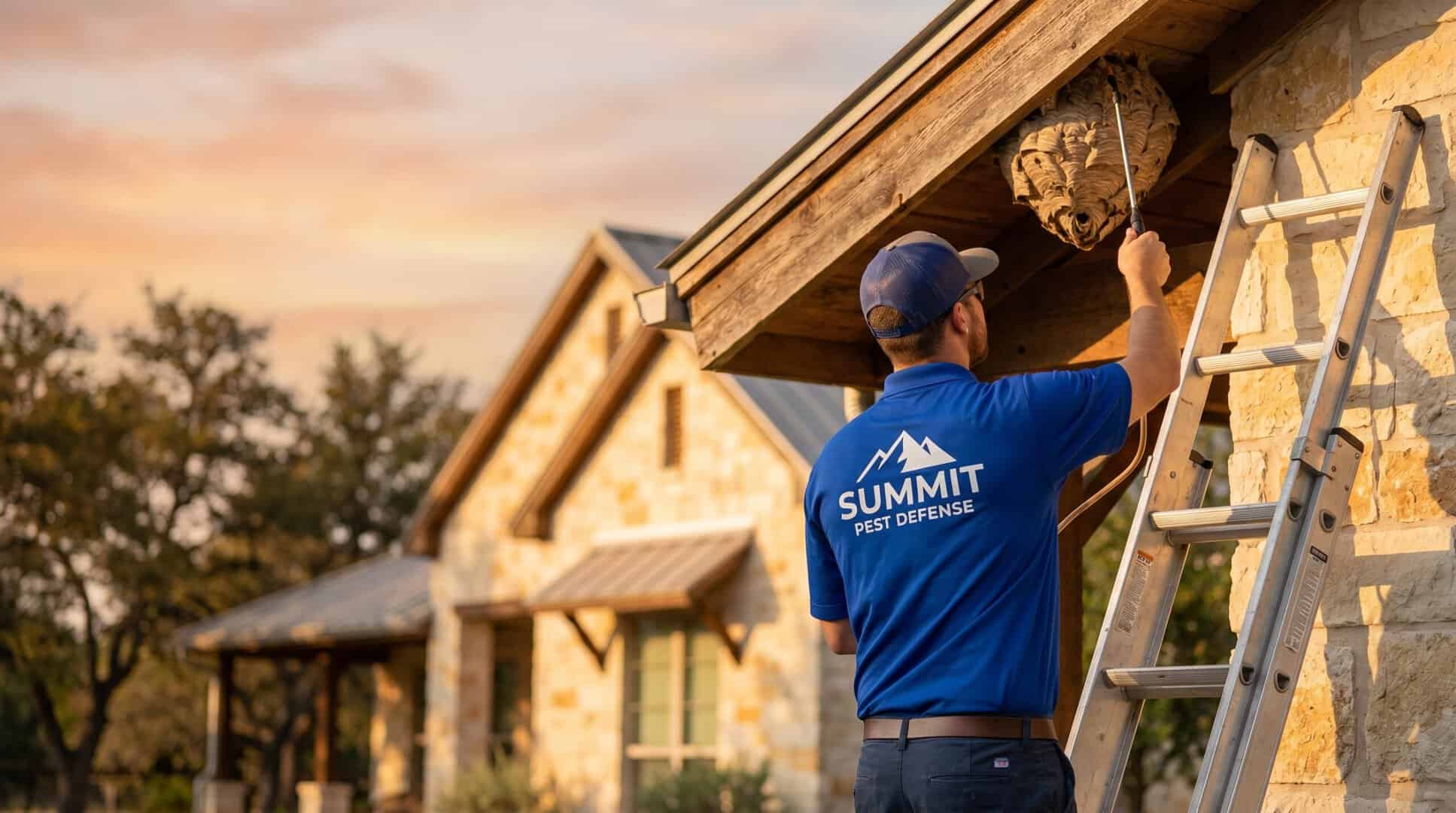
Our wasp control starts with a full walk of the property. We check the roofline, eaves, soffits, vents, attic access, fence lines, sheds, and any covered outdoor space. The goal is to locate every active nest, including the hidden ones behind walls that you may never see from the ground.
Once we know what we are working with, we treat the nest directly. For exposed paper wasp nests, we apply a targeted product right at the source so the colony is knocked down at the nest, not just the few wasps flying around it. For yellow jackets and any nest tucked into a wall void or cavity, we treat the entry point and let the workers carry the material back inside, which reaches the parts of the nest we cannot get to by hand. After the colony is down, we remove the nest material when it is safe to do so, so the spot does not draw scavenging pests or signal the next queen that this is a good site.
We use the lowest effective approach for the situation and keep treatment focused on the nest and the areas wasps actually use. That keeps your family, pets, and any pollinators in the yard out of the line of fire while still clearing the problem.
Why treating the nest beats spraying wasps
The wasps you see flying are a small share of the colony. Most of the population, plus the queen, stays at the nest. Swatting or fogging the visible wasps does nothing to the queen, so the nest rebuilds within days. By treating the nest itself and the routes the workers travel, we take out the colony at its source. That is the difference between a quick knock-down that fails and removal that actually holds.
Keeping wasps from coming back
Removing the nest is step one. Stopping the next one is what keeps your porch usable through the season. After treatment we look at the conditions that drew wasps in and walk you through what to change. Prevention work includes:
- Sealing gaps around fascia, soffits, vents, and utility penetrations where wasps slip in to build inside walls.
- Knocking down the small starter nests in early spring before a queen can grow a colony.
- Keeping trash covered, cleaning up fallen fruit, and moving pet food bowls so foragers have less reason to hang around.
- Checking the high-risk spots, like covered patios and roof corners, during routine visits so a new nest gets caught early.
For homes that get wasps every year, folding these checks into a regular service plan is the most reliable way to stay ahead of them. If we miss a spot and wasps return between scheduled visits, we come back and re-treat at no extra charge. That re-treat guarantee is part of how we work, not an add-on.
Service for homes and businesses across the Hill Country
We treat wasps at single-family homes, rural properties, rental units, restaurants, warehouses, and storefronts throughout Hays and Caldwell counties and the surrounding Hill Country south of Austin. A restaurant patio or a warehouse loading dock with an active nest is more than a nuisance, it is a stinging hazard for staff and customers, and we treat those sites with the same direct approach and written pricing we give homeowners.
Wasps are one of several stinging and outdoor pests that stay active through our long warm season. If you are also dealing with biting insects in the yard, our mosquito control service tackles the standing-water breeding sites that keep them coming back. Properties with rock landscaping and stone foundations common to this area often see scorpion control needs as well, since the same gaps that let wasps in give scorpions a way inside. And when a nest sits inside a wall alongside other intruders, our wildlife control team handles the larger animals that share those same cavities.
Whether it is one paper wasp nest over the front door or a yellow jacket colony hidden in a wall, we will find it, remove it, and help keep it from coming back, with one honest price and a guarantee that stands behind the work.
Not every big wasp is a threat. Before you treat anything, read our guide to the giant cicada killers that show up in Kyle lawns every July.