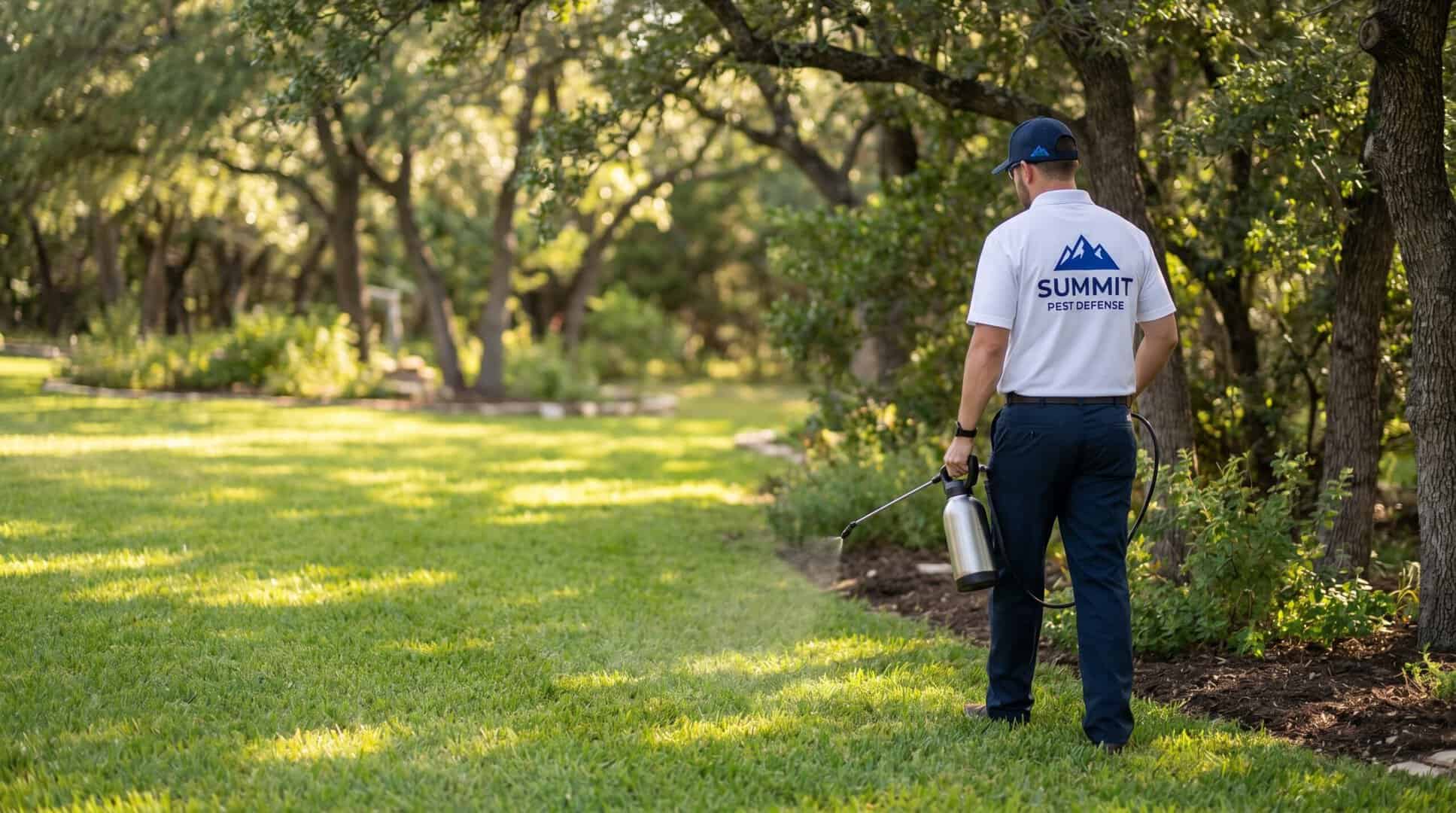
Yard and home flea and tick control for Central Texas properties
Fleas and ticks turn up fast around here, and once they settle into a yard or work their way indoors they multiply quicker than most people expect. Our mild winters and humid stretches let both pests stay active far longer than they do up north, so a single dog walk through tall grass or a few wild animals crossing the property can seed a problem that lingers for months. We treat the part of the problem most homeowners cannot reach on their own: the outdoor breeding ground and the indoor harborage where eggs and larvae hide. Done right, our flea and tick control work breaks the cycle outdoors so your pet preventives and your home stay ahead of the next wave.
We are a family business, three generations in, and we live in these same neighborhoods. You get one written price up front, no long-term contract, and a re-treat between visits if anything comes back. Call before noon and we will usually get out the same day.
Why fleas and ticks thrive here
Both fleas and ticks need a blood meal and a sheltered, slightly humid spot to develop. Kyle and the rest of the Hill Country give them plenty of both. Fleas lay eggs on a host, but those eggs fall off into carpet, pet bedding, and shaded soil, where larvae feed on debris before spinning a cocoon. A flea you see on a dog is a small fraction of the population; the rest are eggs, larvae, and pupae waiting in the environment. That is why spot-treating an animal alone rarely ends an infestation.
Ticks work differently. They climb to the tips of grass and brush, wait with their legs out, and grab onto whatever brushes past, a deer, a stray cat, a dog, or you. Hays and Caldwell counties carry healthy deer and rodent populations, which keep ticks fed and breeding along fence lines, wood piles, leaf litter, and the brushy edges where a mowed lawn meets the natural growth.
Common signs you have a problem
- Your dog or cat scratches, bites at the base of the tail, or loses hair in patches
- Tiny dark specks, flea dirt, in pet bedding or where animals sleep indoors
- Small fast-moving fleas on light carpet or your own ankles after walking the yard
- Ticks found attached to a pet or person after time outdoors, often around the ears, neck, or between the toes
- Repeated bites on the lower legs that itch for days
How we treat fleas and ticks
Every job starts with an inspection. We walk the property and the inside of the home to find where the population is concentrated and how it is getting in. Treatment then targets each life stage, because killing only adult fleas leaves the eggs and larvae to hatch a week or two later and start the cycle over.
Outdoor treatment
Most of the breeding happens outside, so that is where the heaviest work goes. We focus on the shaded, protected zones fleas and larvae prefer and the brushy edges where ticks gather:
- Shaded landscape beds, the drip line under decks and porches, and along the foundation
- Tall grass, fence lines, and the transition strip where the lawn meets brush
- Wood piles, leaf litter, and any spot where pets or wildlife rest in the yard
We apply a product blend that knocks down active adults and includes a growth regulator that stops eggs and larvae from developing. That two-part approach is what actually breaks the cycle rather than just thinning the visible population for a few days.
Indoor treatment
When fleas have moved inside, we treat the carpet edges, baseboards, pet resting areas, and under furniture where larvae burrow down out of sight. Before we arrive we will ask you to vacuum thoroughly and wash all pet bedding on the hottest setting the fabric allows. Vacuuming pulls up eggs and stimulates pupae to emerge, which makes the treatment far more effective. We keep the materials targeted and low-odor so your family and animals can settle back in quickly.
How this works with your vet’s products
We handle the property; your veterinarian handles the animal. The two go together. A topical treatment, a monthly chewable, or a collar protects the pet itself, but none of those products do anything about the eggs and larvae living in the yard and the carpet. A dog on a good preventive can still carry ticks in from an untreated yard and still get bitten by fleas hatching out of the floor. We strongly recommend keeping every pet on a year-round product from your vet, since our mild climate means there is no real off-season here. Our outdoor and indoor work clears the environment so those pet products are not fighting a constant resupply of new pests.
Simple steps that help between visits
- Keep grass cut short and trim back brush along fences and the yard’s edge
- Rake up leaf litter and move wood piles away from the house
- Wash pet bedding regularly and vacuum high-traffic rooms often
- Check pets and yourself for ticks after time in tall grass or wooded areas
- Discourage wildlife by securing trash and not leaving pet food outdoors
Why our approach works
The reason flea and tick control fails so often is that people treat the symptom, the adults they can see, and ignore the eggs, larvae, and pupae that make up most of the population. By hitting every life stage and treating the outdoor breeding ground at the same time as the indoor harborage, we stop the next generation before it matures. The growth regulator keeps working after we leave, and because we do not lock you into a contract, you only continue if you are seeing the results. If pests show up between scheduled visits, we come back and re-treat at no extra charge.
Diseases fleas and ticks can carry
Fleas and ticks are a health concern for people and pets alike. Ticks in our area are linked to Lyme disease, and the lone star tick that is common across Central Texas can trigger alpha-gal syndrome, a serious allergy to red meat that can develop after a single bite. Fleas can carry murine typhus. We cannot treat or cure any of these conditions, and that is a job for your doctor or veterinarian. What flea and tick control does is break the life cycle in your home and yard so there are far fewer of them around to bite, which helps lower the risk of exposure for your household and your animals.
Prevention and keeping pests out
Long-term control is about making the property less welcoming. Ticks need tall grass and brushy edges; fleas need shaded, undisturbed soil and untreated pet areas. Keeping the yard trimmed, the edges clear, and pet zones clean removes most of the habitat. Sealing gaps around the foundation and crawl space also matters, because rodents and other wildlife are a major way ticks and fleas get reintroduced. Our flea and tick control plan pairs the active treatment with this kind of habitat work so the population has nowhere to rebuild.
Because fleas and ticks rarely show up alone in Central Texas, it often makes sense to pair this service with broader coverage. Many of our customers add ongoing residential pest control to keep ants, roaches, and other invaders out at the same time, and properties near heavy brush or with wildlife crossing through frequently benefit from rodent control since rodents carry ticks and fleas right up to the house. If you are seeing a lot of wildlife traffic feeding the tick population, our wildlife control team can address the source.
Whether it is a single bad season or a recurring problem you have fought for years, we will give you an honest assessment, one clear price, and a treatment plan built for how fleas and ticks actually behave in the Texas Hill Country. No fear-mongering, no pressure, just work that holds up.