
If your yard backs up to a creek, a drainage easement, or a low shady spot that stays wet, you already know mosquitoes find you first. Here’s the part most folks get backwards: the creek itself usually isn’t the problem. Moving water doesn’t breed mosquitoes. The still water sitting next to it does. Sort that out and you’ve solved most of your mosquito pressure, whether you live along the Blanco, the San Marcos River, or a Plum Creek drainage in Kyle.
The short version: A creek that keeps moving won’t breed mosquitoes. The trapped, stagnant water beside it will, and a female mosquito can go from egg to biting adult in about a bottle cap of water in 5 to 7 days (CDC). Texas logged 455 West Nile cases in 2024, including a confirmed case in Hays County (Texas DSHS). Find and drain the still water first, then treat what you can’t drain.
Does a creek in your yard actually breed mosquitoes?
No, not the moving part. Mosquito larvae need calm, standing water to develop, so a creek with any real flow flushes eggs and larvae downstream before they mature. What gets you is everything the creek creates around it: backwater pools after a rain, soggy low ground that holds water for days, and the containers and clutter that collect along a wet property line.
So when you’re hunting for the source, look past the water you can hear moving and find the water that just sits. That’s the breeding ground, and it’s usually closer to the house than the creek is.
Where standing water hides on a creek-fed Hill Country lot
You don’t need a pond. A female mosquito lays 100 to 200 eggs at a time (CDC), and she’ll use anything that holds water for a few days. On creek-adjacent lots in Central Texas, the usual suspects are the things you stop noticing:
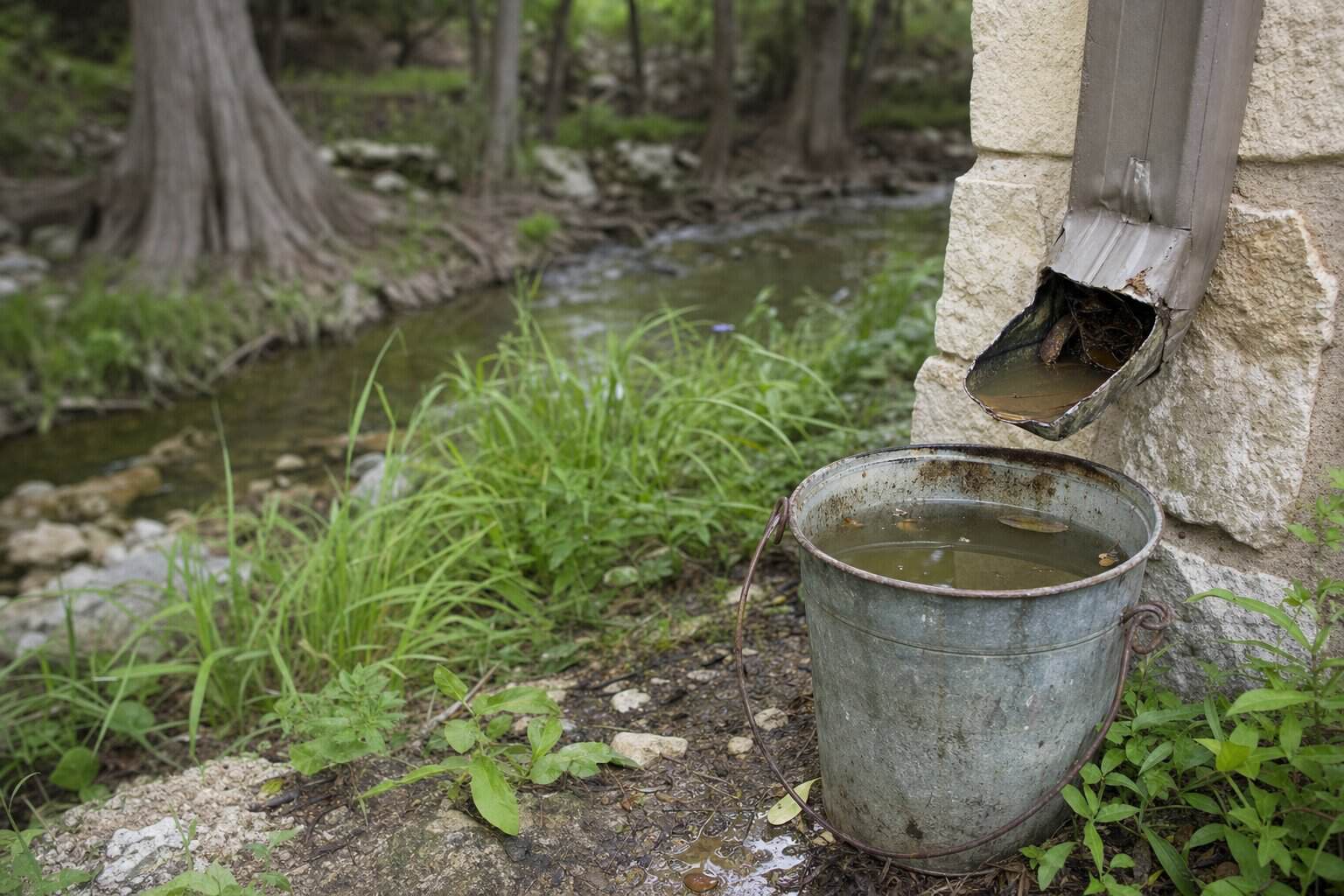
- Clogged gutters and downspouts that pool instead of drain
- French drains and low spots that hold water long after the rain stops
- Plant saucers, buckets, wheelbarrows, and kids’ toys left out
- Tarps, pool covers, and trash-can lids with a sag in them
- Livestock troughs, rain barrels, and clogged AC condensate lines
When our techs walk a creek lot, this is the first pass we make, because clearing standing water does more for your mosquito problem than any single treatment.
Why mosquitoes get worse spring through fall in Central Texas
Mosquito season here runs long. Warm nights start the mosquito life cycle early in spring and keep it going until the first real cold front, so you’re looking at pressure from roughly March through November. The Hill Country adds its own twist: creek corridors and low river-bottom ground stay humid and hold water, which means the breeding sites refill every time it rains.
That’s also why mosquito control on a creek lot is rarely a one-and-done job. The water source never fully goes away, so the goal is keeping the mosquito population knocked down through the season, not chasing a single perfect treatment.
What mosquitoes can carry in Texas
This is the part worth being straight about, without the scare tactics. Mosquitoes in Texas can carry West Nile virus. In 2024 the state recorded 455 human West Nile cases and 56 deaths, and Hays County had a confirmed human case (Texas DSHS). Most people who get infected are fine; about 80 percent never feel sick and fewer than 1 percent develop the serious neuroinvasive form (Texas DSHS).
Here’s the honest framing: cutting down the mosquitoes around your home lowers your risk of being bitten, which lowers your exposure to what they can carry. Pest control doesn’t treat or prevent the illness itself. That’s a doctor’s job. What we can do is shrink the number of mosquitoes that get a shot at you in the first place.
What you can do this week to cut mosquito pressure
Most of mosquito prevention is free and takes an afternoon. The CDC’s rule of thumb is simple: once a week, empty or scrub anything that holds water. Beyond that:
- Walk the property after it rains and dump every container that’s holding water
- Clear your gutters and downspouts so they drain instead of pool
- Drop a Bti mosquito dunk in water you can’t drain, like a rain barrel or a low spot. Bti is a bacteria that kills mosquito larvae and is safe around people, pets, and beneficial insects
- Mow the lawn and trim tall grass and brush, where adult mosquitoes rest during the heat of the day
- Run a fan on the patio. Mosquitoes are weak fliers and a little breeze keeps them off you
- Repair window screens and seal gaps so they stay outside
- For personal protection on bad evenings, use an EPA-registered repellent so the mosquitoes that are out can’t get a bite
None of this is glamorous, but a clean, mowed lawn with no standing water is one of the most effective things you can do, and it’s safe for kids and pets.
Mosquito-repelling plants and landscaping that help a little
You’ll see a lot of lists pushing mosquito repelling plants, and they’re worth a small mention with honest expectations. Citronella grass, lemongrass, marigolds, rosemary, lavender, and basil can nudge mosquito pressure down at the margins, mostly when the leaves are crushed and the oils release. Worked into a patio bed or a few pots near where you sit, these plants are a pleasant addition and they’re safe around pets. They are not a force field, though. If your yard has standing water, a border of citronella grass won’t save you. Drainage does the heavy lifting, and plants are a nice extra.
When DIY isn’t enough: professional mosquito control on creek lots
If you’ve drained what you can and the biting hasn’t let up, a creek lot is exactly where professional mosquito control earns its keep. A real treatment plan works two angles: larvicide in the standing water you can’t eliminate, so the next generation never hatches, and a barrier treatment on the shaded resting spots where adults hide during the day. On creek-adjacent property we usually recommend a recurring schedule through the season, because the water keeps coming back.
A good mosquito control service also looks at the whole yard, not just the water: the shaded lawn edges, the dense plants, and the spots where adults rest out of the sun. Pest control that ignores those resting spots leaves half the job undone.
We diagnose first and treat second. That means we walk your property, find the actual sources, and tell you what’s driving the problem before anyone sprays anything. We’re a family business, so you get a straight answer and the same crew each visit. No contracts, one written price up front, and if the activity comes back between visits, so do we, free.
Do mosquito gadgets and store sprays actually work?
Before you spend money on the wall of mosquito products at the hardware store, here’s an honest take on what helps near a creek and what doesn’t. Bug zappers mostly kill harmless insects, not the mosquitoes biting you, so skip them. Citronella candles and torches do a little in still air right around the flame, but a creek-lot breeze undoes them fast. Clip-on and wearable foggers can buy you an hour at a cookout, but they’re personal protection, not yard control. Hose-end yard sprays knock down adults for a few days, then wear off, and they do nothing about the standing water still breeding the next batch. The pattern is the same every time: gadgets treat the symptom, while removing standing water and treating the shaded resting spots is what actually lowers the population.
Get a straight answer on your creek yard
Tired of giving up your own backyard from spring to fall? We’re a local, family-owned team south of Austin, and we’ll tell you straight what your lot needs. Get a free mosquito control quote, or call us before noon and we’ll usually get out the same day.