Humane wildlife control for Hill Country homes
When a raccoon moves into your attic or a family of opossums takes up under the porch, you need more than a trap set in the yard. Wild animals find their way into Kyle homes and others across the Texas Hill Country because our oak motts, creek beds, and limestone bluffs give them everywhere to live and our houses give them somewhere warm and dry to raise young. We handle the whole problem the right way: find how the animal got in, get it out, and seal the building so the next one cannot follow.
Our approach to wildlife control is built around getting the animal out alive and keeping it out for good. We do not poison, and we do not leave a critter to die inside a wall where it will stink for weeks. Honest work, one written price up front, and a re-treat guarantee between visits if anything comes back.
Why wild animals end up in Central Texas homes
The land south of Austin sits right where neighborhoods meet open brush, so people and wildlife share the same ground. Raccoons, squirrels, opossums, skunks, and the occasional bat or bird all look for the same three things: food, water, and a safe place to den. A roof line with a gap, a chimney without a cap, a torn soffit, or a loose attic vent reads to an animal as an open door.
Spring and early summer are the busiest stretch. That is birthing season, and a female raccoon or squirrel will work hard to get inside a quiet attic to have her litter. Drought pushes animals toward homes too, because your irrigated yard and the cool space under the slab hold water and shade when the creeks run low. Once an animal learns your house is comfortable, it keeps coming back, which is why one-time animal removal without sealing the entry rarely holds.
Signs you have a wildlife problem
Most homeowners hear the problem before they see it. Knowing the signs helps you call before the damage adds up.
- Scratching, thumping, or scurrying overhead, especially at dusk and dawn
- Droppings or feces in the attic, garage, or along a fence line
- Torn soffits, chewed roof edges, or a hole pushed through an attic vent
- A strong musky or ammonia smell coming from the ceiling or walls
- Trampled insulation, greasy rub marks along beams, or shredded nesting material
- An animal seen going in or out of the roof, chimney, or crawlspace at the same time each day
If you spot any of these, it is worth an inspection. A raccoon in the attic can pull apart ductwork and soak insulation with urine in a matter of days, and that damage costs far more than the removal does.
How our wildlife removal works
Every job starts with a full inspection of the roof, eaves, foundation, vents, and attic. We are not just confirming there is an animal. We are tracing exactly where it gets in, what species it is, and whether there are young in the nest, because that changes how we handle the job.
Inspection and identification
We walk the structure inside and out, follow the rub marks and droppings, and pinpoint the entry hole. Identifying the animal matters: a squirrel, a raccoon, and a colony of bats each call for a different method and, in the case of bats and some birds, a different legal timing.
Live capture and exclusion
For most jobs we use live traps placed where the animal travels, then relocate or release according to state rules. Where it works better, we install one-way exclusion doors that let the animal leave on its own but block it from coming back. When there is a litter, we remove the young by hand so the mother does not tear open new holes trying to reach them, then clear the whole family together. This humane wildlife control keeps the animals alive and keeps your home from taking more damage.
Sealing and proofing the home
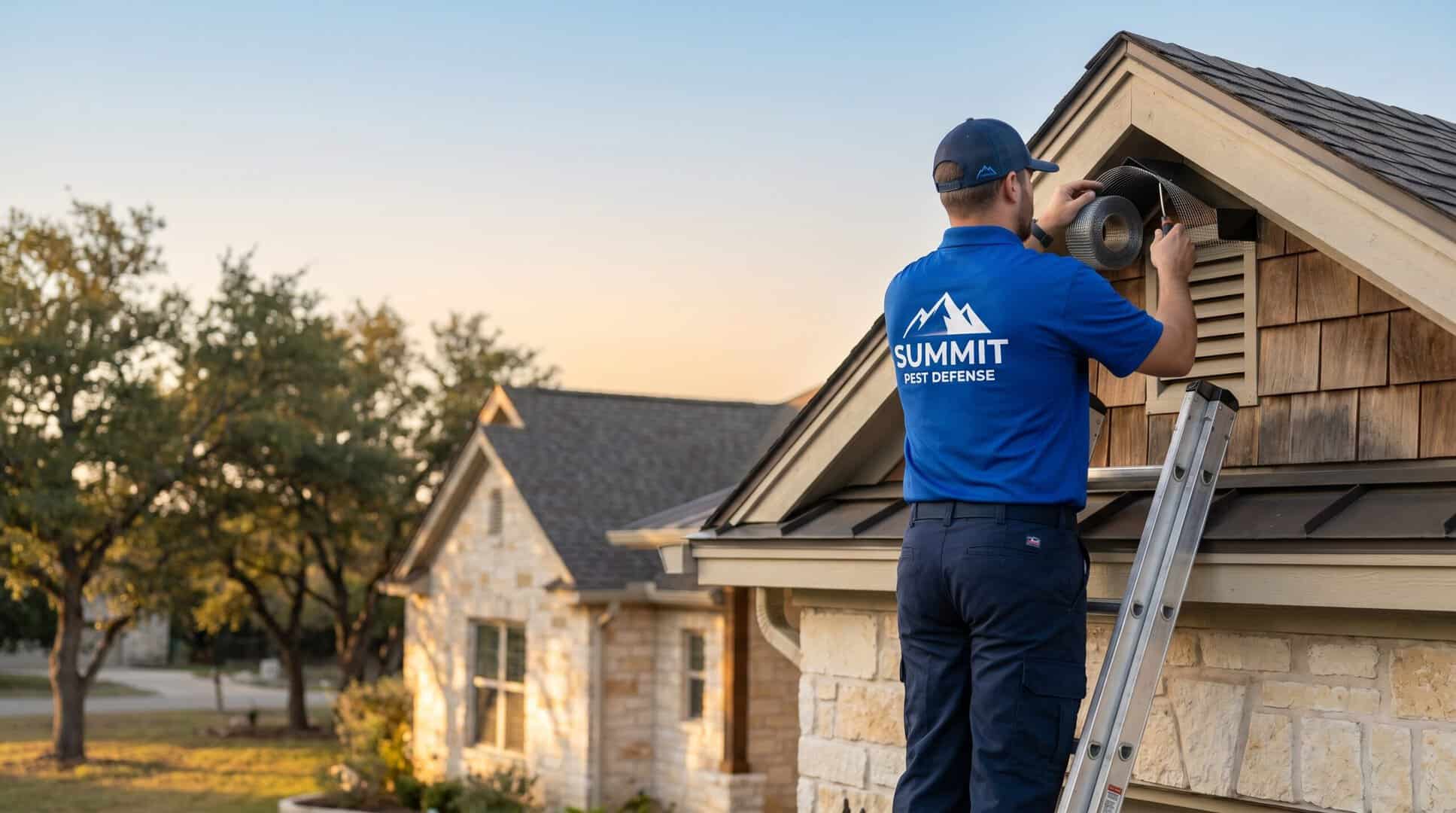
Removal without proofing is wasted money. Once the animals are out, we close the entry points with materials the animal cannot chew or pry: heavy gauge mesh over vents, sealed soffit and fascia gaps, chimney caps, and reinforced roof edges. Wildlife exclusion is the part that actually solves the problem, because a sealed house gives the next raccoon or squirrel no way in.
Cleanup and damage repair
Animals leave a mess behind, and that mess is a health concern, not just an eyesore. Droppings and nesting waste can carry parasites and disease, and raccoon feces in particular needs careful handling. After the animal removal is done, we clean and treat the contaminated areas, haul out ruined insulation, and knock down the smells and pheromone trails that would otherwise invite a new animal to the same spot.
We also handle the entry damage itself: rebuilding torn soffits, patching chewed roof lines, and replacing damaged vents and screens. Closing those repairs properly is what turns a removal into a permanent fix.
Why a sealed home beats repeat trapping
Plenty of outfits will set a trap, haul off whatever they catch, and call it done. The trouble is that the open hole is still there, and Central Texas has no shortage of animals looking for it. A trapped raccoon is simply replaced by the next one within a season. Our work pairs removal with full exclusion and repair so the problem ends instead of repeating. That is also why we put one clear price in writing before we start, with no pressure and no surprise add-ons.
- Full structural inspection, not just a trap in the yard
- Humane live capture and one-way exclusion over poison
- Entry points sealed with chew-resistant materials
- Contaminated areas cleaned and deodorized
- Damage repaired so the home is buttoned up
Wildlife and the rest of your pest picture
Wild animals rarely show up alone. A raccoon or possum living in your attic brings fleas, ticks, and mites in with it, and the food that draws rodents often draws bigger animals too. Once the wildlife is out, it is worth looking at whether you also have a rodent problem riding along, since mice and rats use many of the same gaps. Sealing for wildlife and pairing it with rodent control closes the door on the small intruders as well as the large ones.
The same is true for the parasites that hitch a ride. After a den is cleared we often recommend follow-up flea and tick control so the pests left behind in the insulation and carpet do not become their own infestation. Treating the whole picture at once keeps you from paying for the same area twice.
Local service across the Hill Country
We are family-owned, three generations of it, and we live and work in the same towns we serve. That means we know which animals are active in which season around Kyle, Buda, Wimberley, and San Marcos, and we know how the local building styles tend to let them in. From limestone-clad homes near the creeks to newer builds out toward Dripping Springs, the entry points follow patterns we have sealed many times over.
Call before noon and we can usually get to you the same day. You get a real inspection, a straight answer about what is going on in your attic or crawlspace, one written price, and no long-term contract. We do honest wildlife control for homes and businesses across Hays and Caldwell counties, and we stand behind the work with a re-treat guarantee between visits.