What a termite inspection covers and why it matters
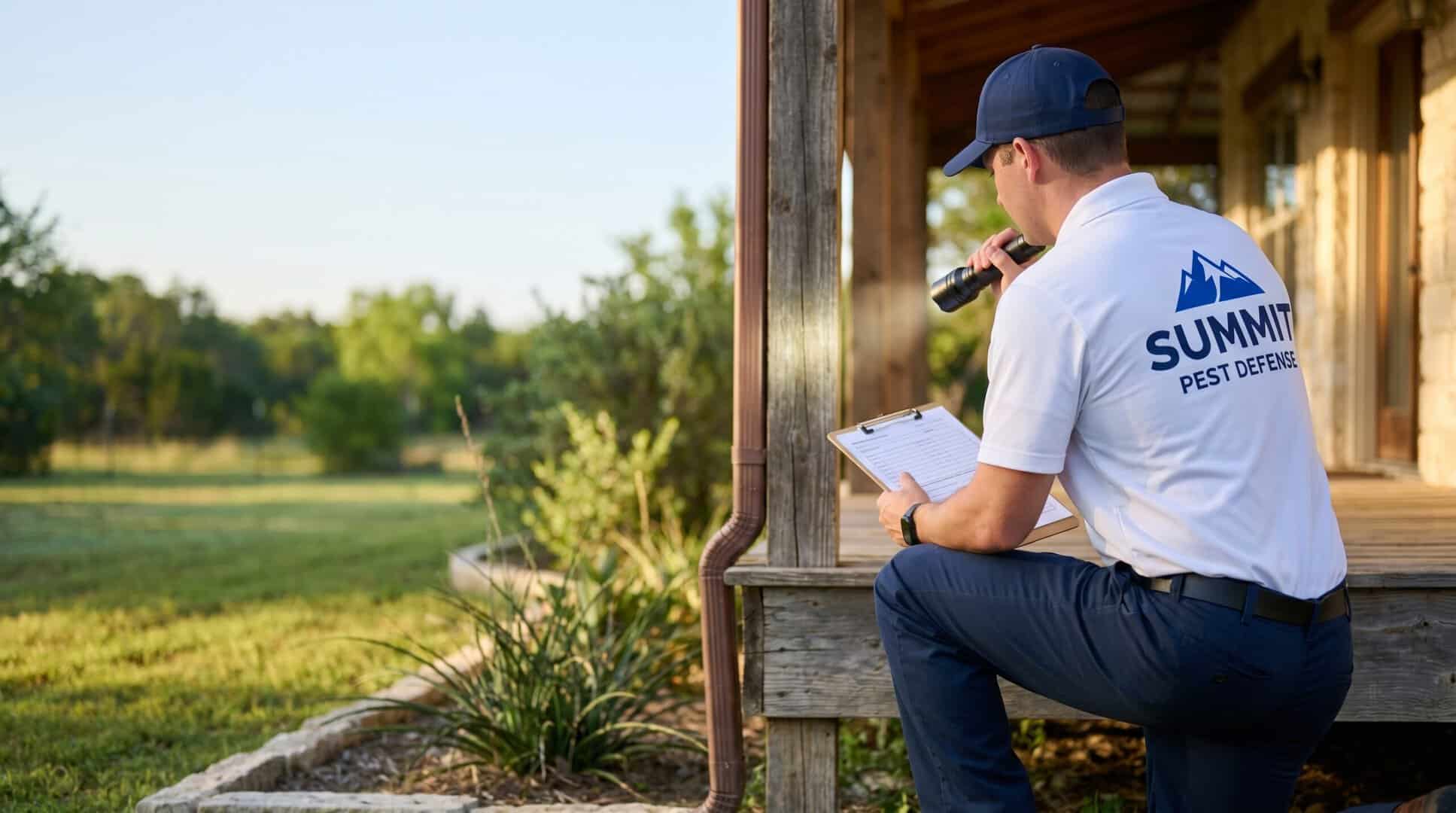
A termite inspection is a careful, top-to-bottom check of your home or building for termites and other wood destroying insects. We walk the structure inside and out, looking at the foundation, crawl space, attic, framing, window sills, door frames, baseboards, and anywhere wood meets soil. The goal is simple: find out whether termites are active, where they are getting in, and how much damage has already been done before it gets worse.
Central Texas sits on heavy clay soil that holds moisture, and our long warm seasons give subterranean termites a year-round window to feed. Across Hays County and Caldwell County, homes built on slabs, pier-and-beam foundations, and additions with shared walls all give termites quiet routes into the wood. That is why a regular termite inspection is one of the smartest things a homeowner here can do.
Why termites are so common in the Hill Country
Subterranean termites live in the soil and tunnel up into a structure through mud tubes. They feed on the cellulose in wood and can work for months without anyone noticing. In the Hill Country, the combination of clay soil, seasonal rain, and dense tree cover keeps soil moisture high near foundations, which is exactly what these colonies need. A property with old mulch beds, wood siding close to grade, or a leaking outdoor faucet is an easy target.
We see the most termite activity in late winter and spring when colonies send out winged termites, called swarmers, to start new nests. A swarm near your windows or porch lights is one of the clearest signs that termites are nearby, and it is a good reason to schedule an inspection right away.
Signs you need a termite inspection
Most people call us after they spot something that does not look right. You do not have to wait for obvious damage. The earlier we catch termite activity, the less wood is lost and the simpler the fix. Watch for these signs:
- Pencil-thin mud tubes running up foundation walls, piers, or floor joists
- Wood that sounds hollow when tapped or feels soft and crumbly
- Discarded wings near windows, doors, or in spider webs after a swarm
- Tight-fitting doors and windows or floors that feel spongy
- Small piles of what looks like sawdust or pellets near baseboards
- Bubbling or cracked paint that hides damaged wood underneath
Even with no visible signs, a termite inspection makes sense before you buy a home, when you are selling, or once a year as routine maintenance. Texas law does not mandate termite inspections for every home sale, but most lenders and buyers want a wood destroying insect report before closing, and that report only holds up when a licensed inspector completes it.
The difference between surface damage and a real problem
Not every soft board means an active colony. Old water damage, fungus, and past termite work can all look alike to an untrained eye. Part of our job is telling the difference so you do not pay to treat a problem that is no longer there, or worse, ignore one that is spreading. We document what we find with notes and photos so you can see exactly what we saw.
How we run a termite inspection
We take our time. A rushed walk-through misses the quiet spots where termites do their work. Here is how a typical inspection goes:
- We start outside, checking the foundation, soil grade, wood siding, fences, decks, and any wood touching the ground
- We move into the crawl space or basement where most subterranean termites first appear
- We check the interior room by room, probing suspect wood, baseboards, window sills, and door frames
- We inspect the attic and roofline for moisture and any wood destroying insects working up high
- We look at plumbing penetrations, water heaters, and anywhere a leak could feed a colony
Our inspectors are licensed and have performed hundreds of inspections across this region, so they know the local construction styles and where termites tend to hide in them. We examine the visible, readily accessible areas of the structure, which is the same standard a real estate transaction calls for.
The inspection report
When we finish, you get a clear, factual report. It lists what we inspected, what we found, where any termite activity or damage is located, and what we recommend next. If the inspection is for a home sale, we provide the wood destroying insect report buyers and lenders expect. We write it in plain language so you are not left guessing what the findings mean for your home.
If we find an active infestation, the report explains the extent of the problem and the conditions feeding it, such as moisture near the slab or wood-to-soil contact. From there we lay out your options and one written price up front, with no pressure and no scare tactics.
What happens when we find termites
Finding termites is not the disaster people fear, as long as you act. Once an inspection confirms an active infestation, the next step is treatment. Depending on the situation that can mean a soil-applied barrier of liquid termiticides around the foundation, termite baits placed in the ground to wipe out the colony, or a combination of both. We match the approach to your home’s construction and the type of termite we find. You can read more about our full termite treatment options and how each method protects your home long term.
Catching the problem during an inspection almost always saves money. A small, localized treatment costs far less than repairing structural wood that termites have hollowed out over a year or two of unnoticed feeding.
Prevention and what you can do between inspections
Inspections work best paired with simple prevention. After we check your home, we point out the conditions that invite termites and how to fix them. A few habits go a long way:
- Keep mulch, firewood, and wood scraps away from the foundation
- Fix leaking faucets, gutters, and downspouts so soil near the slab stays dry
- Grade soil so water drains away from the structure, not toward it
- Leave a gap between wood siding or trim and the ground
- Trim back shrubs and trees that hold moisture against exterior walls
These steps will not replace professional termite control, but they make your home a harder target and help any barrier treatment last longer.
Why regular inspections pay off
Termites do their damage out of sight, so the only reliable way to stay ahead of them is to look for them on a schedule. An annual termite inspection catches new activity while it is small and confirms that any past treatment is still holding. For homes with a history of termites, or those built close to wooded lots common across the Hill Country, we may suggest checking more often.
As a family-owned company serving homes and businesses south of Austin, we treat your property the way we would treat our own. No long-term contracts, no fear-mongering, just an honest look at what is going on and a straight answer about what to do next. If you call before noon, we can usually get out the same day, and our work comes backed by a re-treat guarantee between visits.