
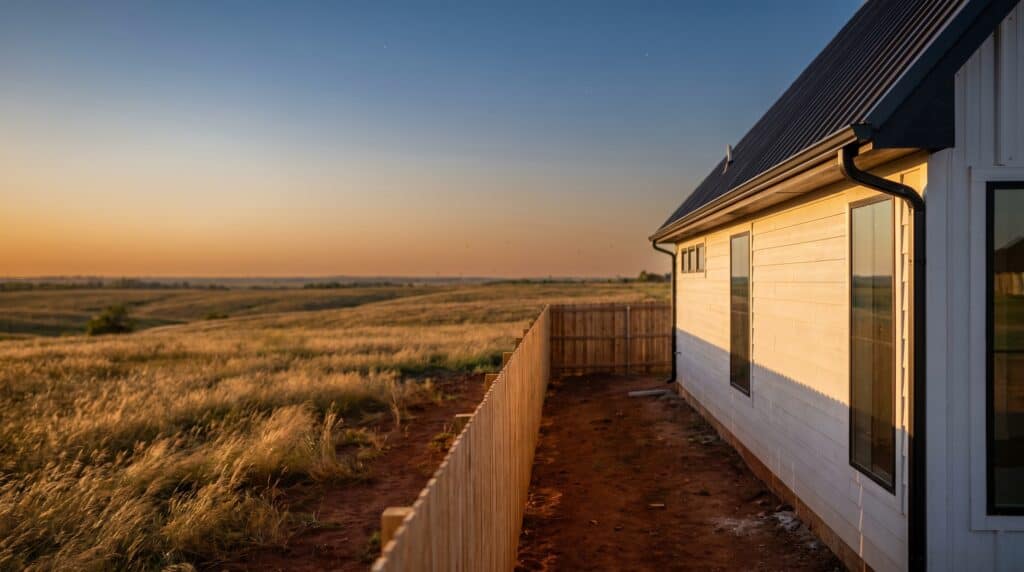
You just closed on a brand-new house in Kyle, everything’s clean and sealed and untouched, and a few weeks in you’re finding ants on the counter and a scorpion in the garage. It feels backwards. New should mean pest-free, right? Not quite. In Kyle’s fast-growing subdivisions, the first couple of years are often the buggiest, and it has everything to do with what was on that land before your house was.
The short version: Kyle’s population is up 62.67% since 2020 (U.S. Census), and most of that growth is new homes built on former farmland and pasture. Construction displaces the pests that already lived there, leaves small gaps around fresh slabs, and the builder’s termite pretreatment is only warranted for a limited time. So new Kyle homes often see more ants, scorpions, and mice in years one through three, not fewer.
Do new construction homes really get more pests?
Often, yes, at least early on. A new house hasn’t had time for pests to find every flaw, but it also sits on freshly disturbed ground with a brand-new set of entry points, and the pests that were living on that lot have to go somewhere. That somewhere is usually the nearest shelter, which is your new home. The “new equals clean” feeling is real, but it doesn’t mean pest-proof.
The good news is that the same things that make a new build vulnerable are easy to get ahead of when you know to look for them.
Why Kyle’s growth puts your new home in pest territory
Kyle is one of the fastest growing cities in the country. The population jumped 62.67% from 2020 to 2026, from about 46,433 people to over 75,000 (U.S. Census), and it grew 9.1% in a single year, making it one of the two fastest-growing U.S. cities over 50,000 (Census data via KXAN). All those rooftops went up fast, and most of them replaced farmland, pasture, and brush.
That matters because pests don’t leave when the bulldozers show up; they relocate. Subdivisions around Plum Creek, Lake Kyle, and the newer developments off the I-35 corridor sit on ground that was crawling with ants, scorpions, spiders, and field mice a few years ago. Build a hundred homes there, and that pest activity gets pushed straight toward the new foundations.
What construction does to the pests around your lot
Grading and digging tear up the established habitat. Ant colonies get split and scattered, scorpions lose the rocks and brush they hid under, and rodents lose the field edges they nested in. They all start hunting for new cover, and a warm, freshly built house with gaps around it is the best option for a quarter mile.
New landscaping adds to it. Fresh sod, mulch, and nursery plants can carry their own hitchhikers, and bare disturbed soil holds water in low spots, which breeds mosquitoes. For the first couple of seasons, your lot is essentially a disruption zone, and the pests are just reacting to it.
The pests new Kyle homes see first
The common pests in a new Kyle build are predictable once you know the pattern:
- Ants, including odorous house ants and fire ants, thrive in disturbed soil and show up fast around new slabs and fresh landscaping
- Scorpions, the striped bark scorpion especially, get pushed out of disturbed rocky ground and climb into garages and weep holes
- Mice move in from former field edges as the weather cools, slipping through gaps a new house hasn’t sealed
- Spiders follow all of the above, since more bugs means more of what spiders eat
Mice are worth a note: rodents can carry illnesses like hantavirus, so keeping them out lowers your exposure risk, on top of the obvious nuisance and chewing damage.
Gaps a brand-new house still has
Builders move fast, and even a well-built home leaves openings a determined pest can use. Thorough inspections of a new build usually turn up the same spots:
- Weep holes in the brick that aren’t screened
- Gaps around plumbing and utility lines coming through the slab
- Garage door thresholds and gaps under exterior doors
- Settling and small cracks as the fresh grading and foundation cure over the first year
- Unsealed gaps where the roofline meets the walls, an easy path into the attic
What the builder’s pest treatment did, and didn’t do
Most new homes get a pre-construction termite pretreatment, and for homes financed with FHA or VA loans, the builder has to provide a Subterranean Termite Protection Guarantee, HUD form NPCA-99-A. That’s real protection, and it’s worth keeping the paperwork. But two things surprise new owners. First, that pretreatment is warranted for a limited term, then it lapses, so it isn’t permanent. Second, standard homeowners insurance excludes termite damage, treating it as a preventable maintenance issue. Termites cause more than $6.8 billion in U.S. property damage a year and hit around 600,000 homes annually (NPMA), and almost none of that is covered.
So the builder handled the termite basics for now. Everything else, the ants and scorpions and mice, plus termite protection after the warranty runs out, is on you.
A first-year pest plan for a new Kyle home
You don’t need to panic, you need a plan for the disruption window. The simplest approach that works:
- Get a move-in inspection so you know which gaps and entry points your specific build has
- Seal the weep holes, slab penetrations, and door gaps before pests find them
- Start a quarterly or bi-monthly exterior treatment for the first year or two, while the lot settles and the surrounding pest activity calms down
- Watch the first warm season closely, since that’s when ants and scorpions test the perimeter
- Keep the builder’s termite paperwork and note when the warranty ends
Honest pest control in Kyle, TX for a new build isn’t about a long contract, it’s about getting the first couple of years right with preventative measures so small problems never become infestations.
A simple checklist for your first week in a new Kyle home
If you’ve just moved in, a little prevention now beats chasing bugs all summer. In your first week, walk the exterior and note where pipes, cables, and the AC line enter the wall, because those gaps are the first thing to seal. Add or adjust door sweeps on the garage and exterior doors, since a new build’s thresholds are a common entry point. Check that the brick weep holes have screens, and pull any mulch or rock the builder piled right against the foundation back about a foot. Inside, shake out moving boxes and shoes before you stash them in the garage, where scorpions like to hide. Keep the builder’s termite paperwork somewhere you can find it, and note the date the pretreatment warranty ends. None of this takes long, and it heads off the ants, scorpions, and mice that test a fresh build first.
Local pest control in Kyle without the contract
We’re a local, family-owned team, and we work new Kyle subdivisions all the time, so we know what to look for on a fresh build. We diagnose first and treat second: we walk your home, find the actual gaps, and tell you what’s driving the problem before we treat anything. No long-term contracts, one written price up front, and free retreatments if activity comes back between visits. Get a free Kyle pest control quote, or call us before noon and we’ll usually be out the same day.