Ant control for Central Texas homes and businesses
Ants are the most common pest call we get across the Hill Country, and for good reason. Our limestone soil, hot summers, and mild winters give dozens of ant species a year-round place to nest and forage. One day the kitchen counter is clear, the next there is a steady line of ants marching toward a spill you did not even know was there. Real ant control is not about killing the few ants you can see. It is about reaching the colony those workers came from.
Why ants show up in Hill Country homes
An ant problem almost always starts outside. A colony nests in the yard, under a slab, in a tree, or in a wall void, and the workers fan out looking for food and water. When the weather turns dry or wet enough, that foraging pushes them indoors. Kitchens, bathrooms, and laundry rooms get hit first because they offer the two things ants want most: moisture and food.
Central Texas gives ants several easy ways inside. Common entry points include:
- Gaps where pipes, cable, and wiring pass through exterior walls
- Cracks in the foundation and weep holes in brick
- Door sweeps and window frames that no longer seal tightly
- Tree limbs and shrubs that touch the roof or siding and act as a bridge
- Mulch and landscape beds pushed right up against the house
Because the nest is the source, an ant spray bought off a shelf rarely fixes anything. It kills the workers on the surface and makes the trail disappear for a day or two. The colony keeps producing more, and within a week the line is back. To truly get rid of an infestation you have to treat the colony, not the symptom.
Knowing the ant species matters
Different ant species behave differently, and the treatment that works on one can scatter another and make the problem worse. We identify the species before we treat, because that decision drives everything else.
Common ants we treat here
- Odorous house ants: small, dark, and drawn to sweets. Crush one and it smells faintly like a rotten coconut. They split their colony when sprayed, so bait is the right call.
- Pavement ants: nest under driveways, patios, and slabs, then push up through cracks and expansion joints.
- Acrobat and crazy ants: fast movers that follow wiring and utility lines, often turning up in odd places like outlets and electronics.
- Carpenter ants: the larger ones that hollow out damp or damaged wood to nest. They do not eat the wood like termites, but they tunnel through it, and finding them usually means there is a moisture issue to fix too.
Fire ants are their own challenge in this region, with painful stings and mounds that pop up across yards after rain. Because that pest needs a different approach built around mound treatment and yard-wide baiting, we handle it separately on our fire ant control page.
How we actually treat an ant infestation
Our process is built to reach the colony and keep it from coming back, not just to clear the ants you happened to notice.
Inspection first
We start by walking the property inside and out. We follow active trails back toward the nest, check the moisture-heavy rooms, and look at the exterior for entry points and conducive conditions. That tells us which ant species we are dealing with and where the colony is likely sitting.
Targeted baiting
For most indoor ant problems, baits do the heavy lifting. We place ant bait where workers are already traveling. They carry it back and feed it to the rest of the colony, including the queen, so the whole nest collapses from the inside. We match the bait to the species, since a sweet-feeding colony and a protein-feeding colony will ignore the wrong product. We never spray over fresh bait, because a repellent on top of it tells the ants to avoid the very thing meant to wipe them out.
Exterior barrier
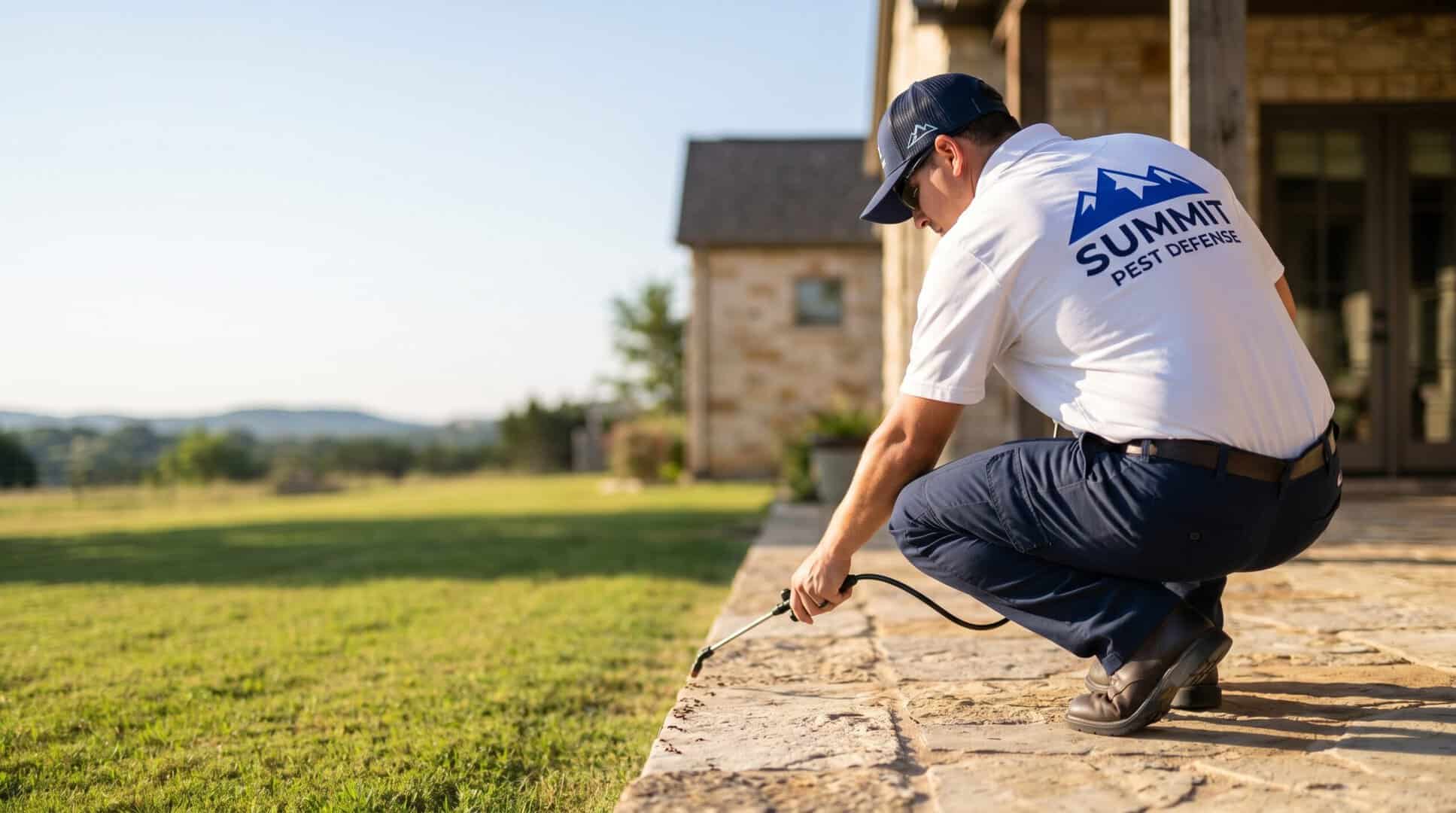
Outside, we apply a non-repellent product around the foundation and known entry points. Ants cannot detect it, so they walk through it and carry it back to the nest before it acts. That treatment, combined with the baits, is what makes the difference between a short pause and an actual fix. For homes on a recurring plan, this exterior work is folded into routine residential pest control visits so the barrier stays fresh through the season.
We give you one written price up front before any work starts, and if ants come back between scheduled visits, we re-treat at no extra charge. No long-term contract is required to get that guarantee.
Why this approach beats DIY ant killer
Most store-bought ant killer is designed to knock down what you can see. Contact aerosols and quick-kill granules feel satisfying because the trail vanishes, but they often trigger the colony to bud, splitting into several smaller nests that are harder to find. White household vinegar can be used to wipe away the scent trail on a counter for a few hours, but it does nothing to the nest. The reason professional treatment works is patience and placement: slow-acting baits and non-repellent products that the ants spread for us, applied where the colony actually lives.
- We target the colony, not the visible workers
- We pick products by species instead of guessing
- We treat the outside source so new foragers stop coming in
- We use the lowest effective amount of product and keep it away from areas where kids and pets spend time
Keeping ants out after treatment
Treatment clears the current infestation. Prevention keeps the next colony from moving in. A few simple habits make a real difference, and we walk you through the ones that matter for your specific home.
- Wipe up spills and crumbs quickly, and store food in sealed containers
- Fix dripping faucets and slow leaks that give ants a water source
- Trim shrubs and limbs back off the roof and siding
- Pull mulch and heavy landscape beds a few inches away from the foundation
- Seal cracks, gaps, and weep-hole entry points where workers slip inside
That sealing work also keeps out other crawling pests. The same gaps ants use are the ones cockroach control targets, so tightening up the exterior pays off in more ways than one.
Local ant pressure across the Hill Country
Ant activity here follows the weather. In late winter and early spring, colonies wake up and send out scouts, which is when most homeowners first notice trails along baseboards and counters. Summer heat and dry spells drive ants toward indoor moisture, and the heavy rains that roll through Hays and Caldwell counties flood outdoor nests and push entire colonies up against and into nearby buildings.
We see this season after season in Kyle, Buda, San Marcos, and the smaller communities south of Austin. Newer subdivisions on freshly graded limestone tend to deal with pavement ants around slabs and patios, while older homes near creeks and tree cover see more odorous house ants and carpenter ants tied to moisture. Because we live and work in this area, we know which species are active when, and we time treatment so it lines up with the colony pressure your property is facing rather than running a one-size-fits-all schedule.
Whether the trouble is a single trail in the kitchen or ants showing up in several rooms at once, the path forward is the same: identify the species, hit the colony, seal the way in, and keep an eye on the exterior. That is how you stop fighting the same ants every month and finally get your home back.