Residential pest control built for Central Texas homes
A house in the Hill Country sits in the middle of brush, limestone, and warm weather that bugs love. That mix is great for living and tough on keeping a home pest-free. Residential pest control here is less about one big spray and more about steady, sensible work that matches the season and the way our local pests behave. We treat homes across Hays and Caldwell counties, and we build every visit around what is actually showing up at your address, not a generic checklist.
We are family-owned and have done this work across three generations in this part of Texas. That history shapes how we run service. You get one written price up front, no long-term contract, and honest answers about what a problem really takes to fix.
Why pests keep coming into Central Texas homes
Our climate runs warm most of the year, so insects stay active far longer than they do up north. Mild winters mean ant colonies, spiders, and roaches rarely get knocked back hard, and they bounce fast in early spring. Add the rocky soil, scrub, and creek beds common around here, and homes end up surrounded by good habitat.
The other factor is simple: your house offers what pests want. Food, water, and shelter. A leaky hose bib, crumbs behind the stove, mulch piled against the foundation, or a gap under a door is all the invitation most of them need. Good residential pest control works on both sides of that equation, treating the pests already present and cutting off the reasons more keep arriving.
Pests we see most around the home
- Ants, including fire ants in the yard and small species trailing across kitchen counters
- Scorpions tucked into garages, baseboards, and stored items
- Spiders in corners, eaves, and around exterior lights
- Cockroaches drawn to kitchens, bathrooms, and water lines
- Rodents looking for warmth and food once the weather shifts
- Wasps building nests under eaves and along fence lines
- Termites quietly working through wood near the foundation
How our home pest control service works
Every job starts with a walk of the property. We look at the foundation, the eaves, door sweeps, window frames, the garage, and the yard, and we note where pests are getting in and what is drawing them. That inspection is where real residential pest control begins, because the treatment only works if it is aimed at the right places.
From there we lay out a plan and give you one written price. No surprises added later, and no pressure to sign up for anything you do not want. If you call before noon, we can usually get to you the same day.
The treatment itself
A typical visit covers the inside and the outside of the home. Indoors, we focus on the spots pests travel and hide: under sinks, along baseboards, around plumbing, and in the corners of garages and closets. We use targeted products placed where they do the work and stay out of the way of your family and pets.
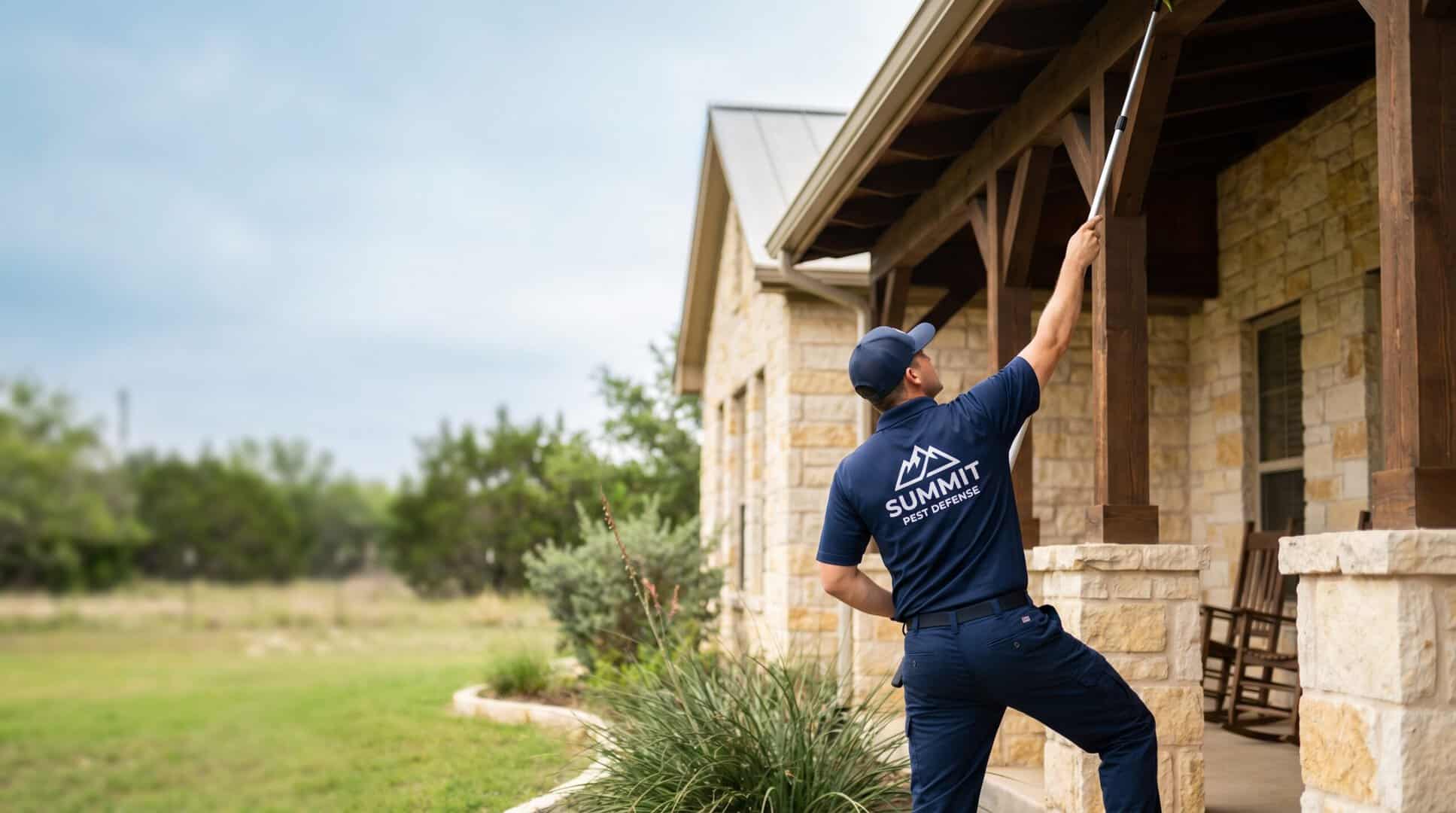
Outside is where most of the long-term control happens. We treat the foundation perimeter, knock down spider webs and wasp nests, hit ant trails and mounds, and put down a barrier that keeps the next wave from walking inside. For many homes, strong exterior work means we rarely need to do much indoors at all.
- Interior spot treatment in kitchens, baths, garages, and entry points
- Exterior perimeter barrier around the full foundation
- Web and nest removal from eaves, porches, and corners
- Direct treatment of ant trails, mounds, and active harborage
- Crack and crevice work where pests slip into the structure
Why a recurring plan keeps a home protected
One treatment clears what is in the house now, but our weather does not give pests a long off-season. That is why steady, scheduled service holds up better than waiting for the next problem. Recurring visits keep the exterior barrier fresh and catch new activity before it turns into an infestation.
We also back the work between visits. If pests come back while you are on a plan, we re-treat at no extra charge. That guarantee is the whole point of ongoing pest management: you should not be paying again to fix something a treatment was supposed to handle.
Pests that need their own approach
Most general pests fall under a standard home treatment, but a few need specific methods and products, and lumping them into a routine spray does not work.
Wood-destroying insects are the clearest example. Termites do not respond to the perimeter products we use for ants and spiders, and they can cause real structural damage before anyone notices. They call for a dedicated plan, which is why we handle them through our termite treatment service rather than a general visit. Rodents are another case where traps, exclusion, and sealing entry points matter more than spraying, and our rodent control work is built around that.
When you book a home service, we will tell you plainly whether what you have fits a standard treatment or needs one of these targeted programs. No upselling for the sake of it, just an honest read on what the situation takes.
Prevention and sealing that make treatments last
The best residential pest control reduces how often you need us at all. A lot of that comes down to closing the easy entry points and removing what draws pests close to the house. During service we point out the trouble spots and handle what we can on the spot.
- Seal gaps around pipes, wiring, and utility penetrations
- Add or repair door sweeps and weather stripping
- Pull mulch, firewood, and debris back from the foundation
- Trim shrubs and limbs that touch the roof or walls
- Fix drips and standing water that feed insects and rodents
- Store pet food and pantry items in sealed containers
These steps sound small, but together they shrink the welcome mat. Combined with regular treatment, they are what keep a home quiet through the warm months when pest activity peaks.
The local difference in pest control
Pest control in the Texas Hill Country is not the same job it is in a wetter or cooler region. The scorpions, the fire ants, the long warm stretch, the limestone and brush, all of it shapes how a home needs to be treated and how often. A technician who knows Kyle, Buda, and San Marcos already knows what is likely behind your specific problem before stepping inside.
That local read is the core of what we do. We have spent generations learning how pests move through homes in this area, and that experience goes into every treatment plan we write. Whether you are dealing with a single stubborn invader or want steady year-round coverage, we will give you a straight price and service that fits your home and the place it sits in.